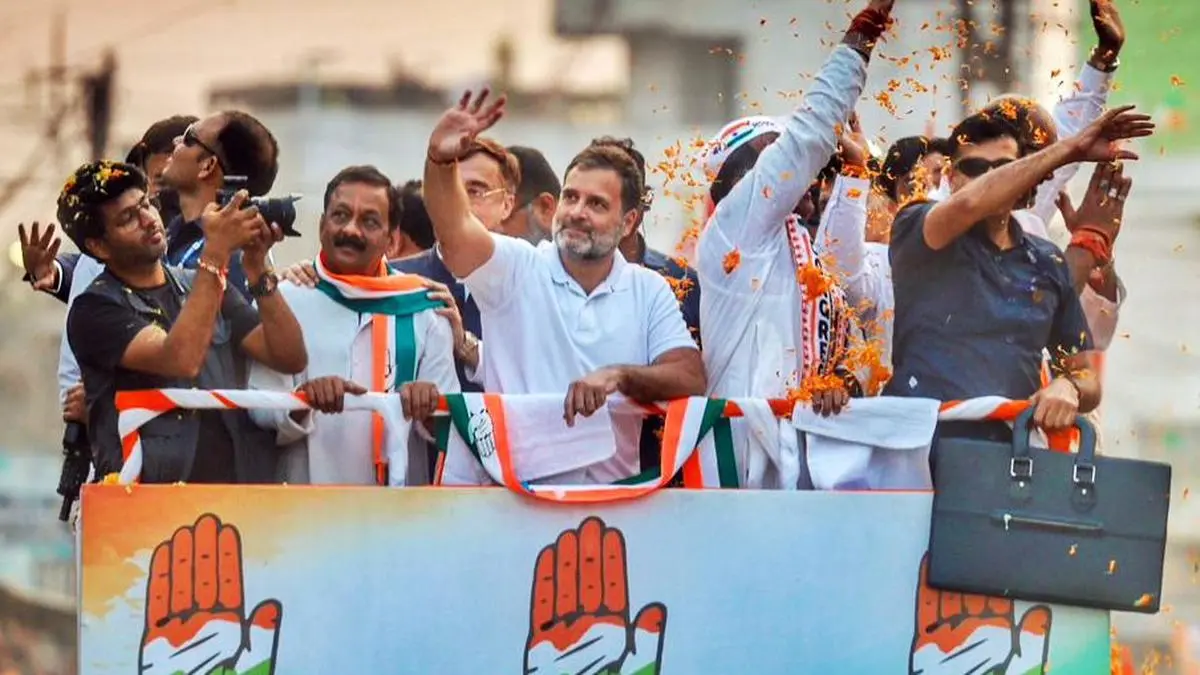
Although the Uttar Pradesh Assembly elections are expected early next year, the Congress has already started shortlisting constituencies it intends to contest and has instructed All India Congress Committee (AICC) secretaries to provide names of likely nominees for seats the party may demand during seat-allocation negotiations with ally Samajwadi Party (SP).
The Congress leadership is especially cautious about hurdles in negotiations after what it describes as a “damaging experience” in the 2025 Bihar Assembly elections, where late seat-sharing discussions and “friendly contests” among INDIA bloc partners harmed its electoral prospects.
Sources within the organisation told The Indian Express that the AICC general secretary overseeing Uttar Pradesh, Avinash Pande, has directed the six party secretaries in the state to compile two separate lists. “The first list will contain probable nominees for all 403 Assembly constituencies, while the second will identify nearly 100-120 constituencies with better winning chances,” a source said.
The party has internally divided Uttar Pradesh’s 403 Assembly constituencies into three groups: strong potential, marginal and weak. “At present, we have identified more than 100 seats in the first category, close to 200 in the second, and roughly 120 in the third,” a senior Congress functionary said.
An AICC secretary associated with the exercise said inputs were being collected from grassroots units and ticket aspirants. “We are evaluating constituencies and interacting with leaders interested in contesting. Most of us are likely to submit our reports to the in-charge within the next few days,” the office-bearer said.
Party insiders said the Congress hopes to contest around 80 seats as part of an alliance with the SP. “We will identify nearly 100-120 seats where we feel we are competitive and eventually settle for about 80. We also do not want seats where the caste or social arithmetic does not support us. The emphasis is on winnable constituencies,” a party insider said.
The leadership is also careful about allowing state-level leaders excessive influence in the process. “There has to be equilibrium. No one in the UP unit favours an alliance because it cuts down both the number of seats and the clout of local leaders. This feeling was visible during the 2022 Assembly elections when the leadership was convinced to fight alone. We all witnessed the outcome,” said a senior Congress leader from Uttar Pradesh based in Delhi.
In the 2022 Assembly polls, the Congress contested all 403 constituencies but secured victory in only two, with its vote share declining to a historic low of 2.33%.
Pande told The Indian Express on Sunday that preparations for the 2027 elections had started six months ago. “The first phase was strengthening the organisation, and that exercise has been completed. We have identified 2,200 potential candidates for the 403 constituencies in the state,” he said.
Regarding the alliance with the SP, Pande said discussions would begin at the appropriate moment. “When the time for seat-sharing discussions arrives, the Congress will engage with the SP,” he said.
Keeping possibilities open
While the Congress high command, including Leader of Opposition Rahul Gandhi, supports continuing the alliance with the SP, a section within the organisation wants to retain the possibility of contesting independently.
“Our alliance with the SP worked extremely well in the 2024 Lok Sabha elections in Uttar Pradesh. The BJP was reduced to 240 seats nationally and below the majority figure because of that alliance. Why should we disturb that arrangement now?” said a senior Congress leader considered close to Gandhi.
In the 2024 Lok Sabha elections, the SP and Congress contested 63 and 17 seats respectively in Uttar Pradesh. Together, the alliance won 43 constituencies: 37 for the SP and six for the Congress.
Leaders familiar with the strategy said the Congress plans to focus on Muslims, Dalits and Brahmins ahead of the Assembly elections. “The Brahmin outreach is connected to a perception of dissatisfaction within the community regarding the Adityanath government’s alleged preference for the Thakur community. Brahmins were traditionally Congress supporters in Uttar Pradesh before shifting towards the BJP because of Hindutva politics,” a senior leader said.
“The Dalit vote is equally significant. In the 2024 Lok Sabha polls, Dalit backing greatly benefited the alliance. Muslims, too, continue to remain a crucial support base for the Congress,” the leader added.
Muslims account for nearly 20% of Uttar Pradesh’s population, while Brahmins are estimated to form 7-10%. Dalits make up almost 20% of the state’s population.
The Congress hopes to conclude seat-sharing negotiations with the SP by August or September to provide candidates enough time to start campaigning. However, party leaders admit that the discussions may not be straightforward.
During the 2024 Lok Sabha elections as well, the SP agreed to allot 17 of the state’s 80 seats to the Congress only after lengthy negotiations driven by concerns over division of Muslim votes. Seat-sharing talks then continued until the final stages — a situation both parties are eager to avoid before the Assembly elections.
Speculation regarding a leadership reshuffle in the Uttar Pradesh Congress unit continues to intensify. There is increasing buzz in both Lucknow and Delhi that the state leadership could undergo certain changes before the elections. While the party leadership has maintained silence, workers and leaders in the state are awaiting clarity.
The role of Priyanka Gandhi Vadra, MP from Wayanad, in the upcoming election campaign also remains uncertain. Several senior leaders in the state unit are considered close to Vadra and are waiting for a decision from the leadership.
Vadra had spearheaded the Congress campaign during the 2022 Assembly elections, in which the party delivered a poor performance. Whether she will once again assume a central role in the campaign remains uncertain, with state leaders still awaiting guidance from the high command.