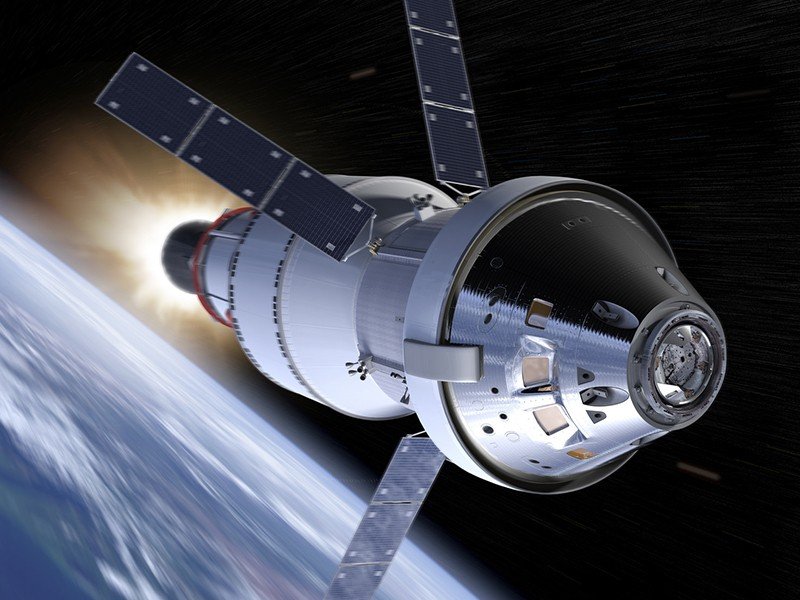
Artemis III: Nasa has unveiled initial information for its proposed Artemis III mission, describing an intricate Earth-orbit demonstration flight intended to ready astronauts and spacecraft for upcoming lunar surface expeditions.
Unlike previous Artemis missions centred on deep-space exploration, Artemis III will stay in low Earth orbit and function as a significant systems validation for future Moon landings under the wider Artemis initiative.
The mission will evaluate rendezvous and docking procedures between Nasa’s Orion spacecraft and commercial lunar lander vehicles being produced by SpaceX and Blue Origin.
According to Nasa, Artemis III is designed to minimise technical and operational hazards ahead of Artemis IV, which is anticipated to transport astronauts to the Moon’s southern polar area.
While this is a mission to Earth orbit, it is a critical milestone toward successfully reaching the Moon with Artemis IV,” stated Jeremy Parsons, acting assistant deputy administrator for Nasa’s Moon to Mars programme.
The mission will commence with the launch of Orion aboard Nasa’s Space Launch System rocket from Kennedy Space Center in Florida. Instead of carrying the rocket’s standard interim cryogenic propulsion stage, Artemis III will employ a non-propulsive “spacer” structure that replicates the mass and dimensions of the upper stage.
Once in orbit, Orion’s European-constructed service module will circularise the spacecraft’s orbit around Earth, enabling more adaptable launch windows for the different spacecraft participating in the mission.
Nasa says the mission framework will include Orion, a Starship human landing system pathfinder from [SpaceX](https://www.spacex.com?utm_source=chatgpt.com), and a Blue Moon Mark 2 lander pathfinder from [Blue Origin](https://www.blueorigin.com/?utm_source=chatgpt.com).
Although final operational strategies are still being adjusted, Nasa indicated astronauts could potentially board at least one of the lander test vehicles during the mission.
Artemis III will also represent the first in-flight evaluation of Orion’s docking system capabilities while allowing astronauts to remain aboard the spacecraft longer than during the earlier Artemis II mission.
The agency additionally plans to assess Orion’s enhanced heat shield during re-entry to support more adaptable future lunar return operations.
Nasa says the mission will demand coordination among numerous commercial and international collaborators, making it one of the most operationally demanding Artemis missions so far.
The Artemis programme serves as the basis of Nasa’s long-term objective to establish a sustained human presence on the Moon and eventually enable future crewed expeditions to Mars.