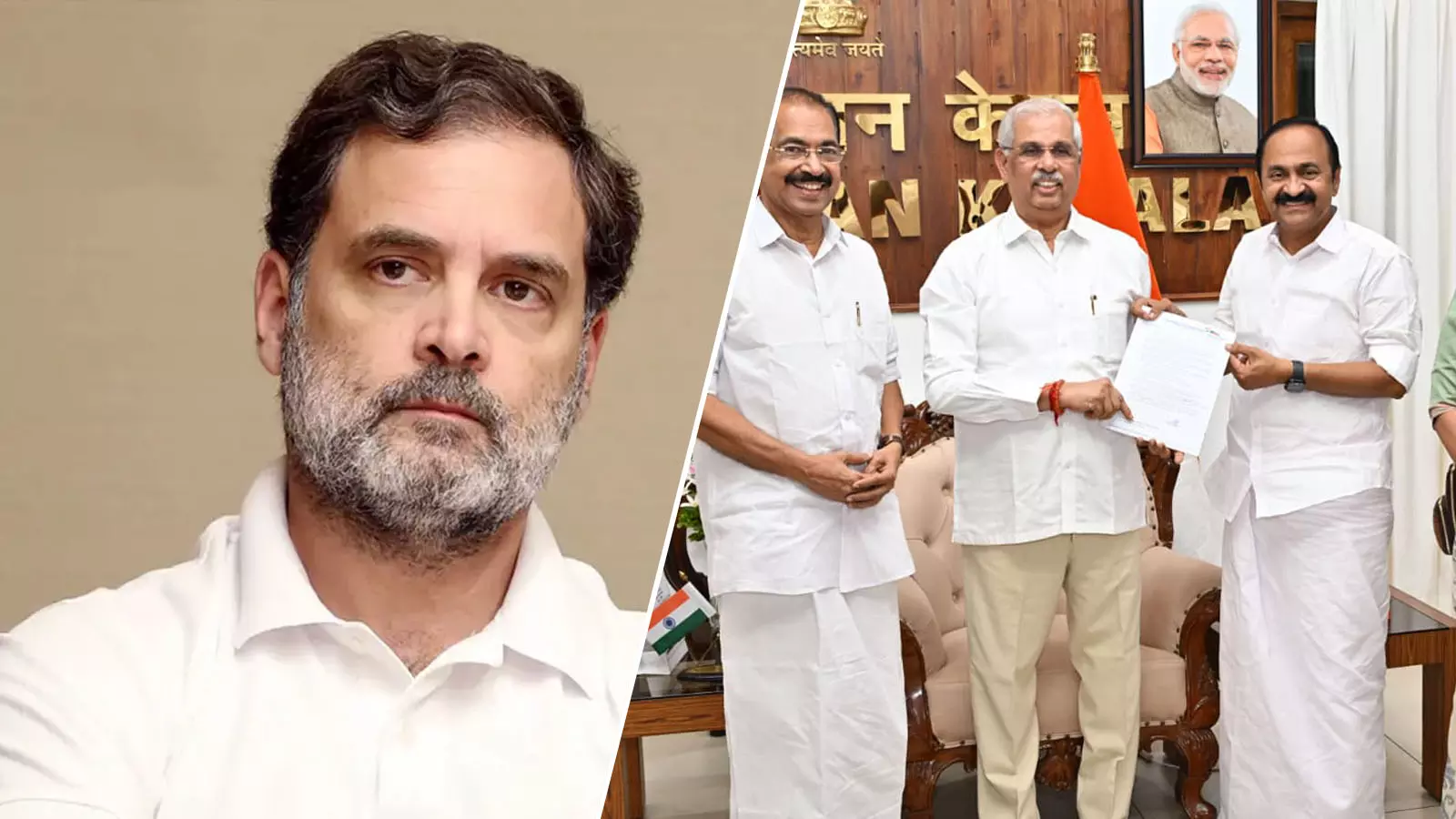
After 10 days of prolonged discussions and consultations, the Congress high command on Thursday appointed senior leader V D Satheesan as the next Chief Minister of Kerala. Satheesan emerged victorious in the contest for the top position after narrowly surpassing two other aspirants, AICC general secretary (organisation) K C Venugopal and former Opposition leader Ramesh Chennithala, after the party leadership considered several political and organisational aspects before reaching a final call.
Stand of IUML and other allies
While a sizeable section of newly elected Congress legislators (out of 63) were believed to favour Venugopal, one of the decisive factors that worked for Satheesan was the backing from allies. The Indian Union Muslim League (IUML), with 22 legislators in the 102-member UDF camp, threw its support behind Satheesan, who has been heading the Opposition for the past five years.
The IUML felt that the UDF’s sweeping victory was an endorsement of Satheesan’s political approach. Moreover, other allies such as the Kerala Congress (Joseph) with seven members and the Revolutionary Socialist Party (RSP) with three also stood firmly with Satheesan.
The Congress high command could hardly overlook the IUML’s position, considering the party acts as the Congress’s grassroots machinery. The IUML played a key role in Rahul Gandhi’s emphatic victories from Wayanad in both 2019 and 2024, and later in Priyanka Gandhi’s bypoll triumph from the same constituency. Since the IUML remains more active in booth-level election mobilisation than the Congress in several parts of Kerala, the leadership could not disregard its opinion.
Support from party workers and civil society
Satheesan’s backing mainly came from grassroots workers inside the party. Party cadres poured onto the streets demanding that Satheesan be elevated as the CM. The dominant feeling among workers was that Satheesan, who spearheaded the election campaign, should also head the government. Venugopal’s push for the top role generated discomfort among sections of Congress workers, particularly because he had publicly declared during the campaign that he was not seeking any post.
Many workers believed that any attempt to sideline Satheesan after the victory would amount to denying him political recognition for the success. Venugopal created an impression that he was attempting to appropriate the rewards of Satheesan’s efforts. The Congress’s disappointing performance in the Assembly elections across the Hindi heartland under Venugopal as AICC organisation secretary also became a talking point in Kerala.
MLAs facing backlash
Several newly elected Congress MLAs identified as Venugopal loyalists encountered protests from party workers in their constituencies. Some legislators were even compelled to shorten or cancel their post-election thank-you tours.
Prominent young Congress leaders such as Shafi Parambil and Mathew Kuzhalnadan also came under criticism from local Congress workers over their perceived resistance to Satheesan. On social media, they were portrayed as leaders acting against the people’s mandate. Many of these Congress MLAs faced online questions and were reminded that they had not been elected merely to support Venugopal in the CM contest.
Bypoll factor
If Venugopal had become Kerala CM, the Congress would have been forced to face two by-elections. The party would need a sitting legislator to resign from a secure seat to facilitate his entry into the Assembly within six months. Venugopal’s resignation as the Lok Sabha MP from Alappuzha would also have triggered another bypoll. Venugopal had contested the 2024 parliamentary election while still serving as a Rajya Sabha MP from Rajasthan. The Congress later forfeited that seat after his resignation from the Upper House. In Kerala, the UDF remained concerned about how voters might react to another by-election.
Public perception
Although the Congress did not officially project a CM candidate in Kerala before the elections, Satheesan gradually evolved into a natural choice for the role over the past five years. The UDF’s victory was widely interpreted as validation of Satheesan’s political line on multiple issues.
Satheesan was the most forceful and outspoken critic of former CM Pinarayi Vijayan, who was regarded as a dominant power centre in Kerala. At a time when several Congress leaders hesitated to confront controversial anti-Muslim statements made by influential Hindu community leaders, Satheesan consistently cautioned against efforts to polarise Kerala’s politics. By openly challenging the vote-bank politics linked to leaders such as Vellappally Natesan and G Sukumaran Nair, he cultivated an image of defending secular politics. Despite pressure from community organisations, Satheesan declared that if the UDF failed to secure more than 100 seats, he would quit politics. This, in turn, helped him attract support from a section of Left sympathisers as well.